|
School Programs
All of the programs below are available at the Myrick Conservation Center.

Programs at the Myrick Conservation Center.
ELEMENTARY SCHOOL PROGRAMS
Adventure Team
Grades 4-5; 2 hours; $6.25/participant
Can you untangle a human knot? Can two groups create an identical piece of art while whispering down the lane? Students will participate in a variety of problem solving experiences that require group cooperation and physical activity. Activities are designed to break down barriers, foster teamwork and identify leadership potential among students. This program is recommended at the beginning of the school year or prior to group projects or problem-solving activities.
All About Owls
Standards: 3.3.4/3.3.7/4.7.4/4.7.7
Grades 3-6; 1 hour; $5.25/participant OR 2 hours; $8.50/participant with owl pellet dissection (one pellet per student included)
What makes an owl a great nocturnal predator? Can an owl really turn its head all the way around its body? Learn about the fascinating lives of owls through an exploration of their amazing adaptations. Get a close look at taxidermy mounts of at least two different species of owls that live in Southeastern Pennsylvania.
Amazing Adaptations
Standards: 3.3.4/3.3.7/4.6.4/4.7.4
Grades 3-5; 2 hrs; $6.25/participant or 1.5 hrs; $5.50/participant
Observe a variety of structural and behavioral adaptations of plants and animals at the Myrick Center or other location of your choice. Students will play games and go on a hike to see examples of how plants and animals have adapted in order to survive.
At Home in Your Habitat
Standards: 4.3.4/4.4.4/4.6.4/4.7.4
Grades K-3; 1.25 hours; $5.25/participant
Search for signs of wildlife while learning the four basic components of a habitat. Students discover a variety of animal homes while understanding how specific habitats provide food, water, shelter and space.
Backyard Farming
Standards: 3.6.4/4.4.4/4.5.4/4.6.4/4.8.4
Grades 2-5; 2 hours; $6.25/participant
Available Sept.3-Oct.19, April 14-Oct 17
Learn about the life cycle of plants and insects while exploring the Myrick Center's organic vegetable garden and greenhouse. Students will test the soil, search for insects and help plant and harvest vegetables as the season permits. Produce is donated to local food cupboards. See "Growing, Growing, Gone" for a Double program option.
Bug Basics
Standards: 3.2.4/3.3.4/4.6.4/4.7.4
Grades 2-5; 1.5 hours; $6.25/participant
Learn the basic body parts of an insect and which surprising parts are used to smell and taste. Study the stages of an insect's life and examine preserved insects. Perform a simple experiment to determine how different types of insect mouthparts enable insects to feed on different foods. Read clues on a pollination path to figure out the mystery pollinator and get a closer look at insects using a video microscope.
Common Sense
Standards: 4.7.4
Grades K-4; 1.25 hours; $5.25/participant
Test your sense of touch, smell, sight and hearing in the outdoors during an exploratory walk. Students will learn to use their "tools" to become more aware of the world around them.
Communities at Work
Standards: 3.1.4/3.1.7/3.3.4/3.3.7/4.1.4/4.2.4/4.3.4/4.6.4/4.7.4
Grades 4-5; 2 hours; $6.25/participant
Explore a pond, stream or field/forest community while discovering how its inhabitants interact and adapt. During each community study, students collect organisms and examine their interdependency through the transfer of energy. Small groups may request which community they would like to explore. Due to property limitations, large groups will need to be divided so that each student explores only one community.
Digging Dirt
Standards: 4.4.4/4.6.4
Grades 2-4; 1.5 hours; $5.50/participant
Do all soils feel the same? Smell the same? Look the same? Students will use their senses to distinguish different types of soil. Learn what ingredients make up soil and what animals use it through hands-on exploration.
Findings of Fall
Standards: 4.6.4/4.7.4
Grades K-2; 1.25 hours; $4.50/participant Available Sept.3-Nov.16
Discover how plants and animals change in the fall to prepare for the upcoming winter. Observe the beautiful variety of autumn colors; learn how different animals plan ahead, migrate, and hibernate and investigate the adaptations of special seeds.
Geology and Landforms
Standards: 3.5.4/3.5.7/4.2.4/4.8.4
Grades 3-5; 1.5 hours; $5.50/participant
Explore a rock outcropping that was quarried in the 1800's and go through the tests geologists use to identify rocks. Discover connections between the rock and soil cycles using a scavenger hunt. Observe how humans and nature impact these cycles. Discover how weather, water and plants affect landforms.
Growing, Growing, Gone
(DOUBLE PROGRAM)
Standards: 3.6.4/4.4.4/4.5.4/4.6.4/4.8.4
Grades 2-5; 2 lessons (approx. six weeks apart) -- 2 hours per lesson; $11.75 total/participant
Available Sept 3-Oct. 19, 2007 and April 14-Oct. 17 2008
Learn about the life cycle of plants and insects while exploring the Myrick Center's organic vegetable garden and greenhouse. Students will test the soil, search for insects and help plant and harvest vegetables as the season permits. Produce is donated to local food cupboards. During this double program, students will start seeds during the first program and transplant/harvest those plants during their return visit approximately six weeks later. Students will also participate in extension activities to build and expand upon their initial visit. Students will plant a seed their first visit and take a seedling home at the end of their second visit.
Inspect an Insect
Standards: 4.6.4/4.7.4/4.8.4
Grades 3-5; 1.5 hours; $5.50/participant Available Apr.14-Oct.17
Collect fascinating insects in a sweep net. Learn the characteristics of insects and observe the similarities and differences between the various insects and other invertebrates collected at the Myrick Center. Compare and contrast the adaptations of insects that live on the land with those that live in water.
Lenape Lore
Standards: 4.2.4/4.6.4/4.7.4/4.8.4
Grades 4 & 5; 2.5 hours; $7.00/participant
Explore the ways of 'pre-contact' Lenape, our local Native Americans. Experience and learn about home life, hunting, foraging, fishing and games while doing hands-on activities in our Lenape Village. Find out about giving back to the earth and taking only what you can use. Maximum 75 students. Minimum 25 students
Lenape Sense
Standards: 4.7.4
Grades 2-3; 1.5 hours; $5.25/participant
This lesson is designed as an introduction to the 4th grade Lenape Lore program. Students travel back in time and imagine the life of the Lenape. Students use their five senses to sharpen their observational skills and gain a better understanding of how animals and people use their senses to survive. Various games and hands-on activities are used to connect students with the ways of the Lenape. The lesson emphasizes how indigenous peoples lived in harmony with nature and why this is important for us today.
Pebbles, Sand and Silt
Standards: 4.6.4
Grades 1-3; 1.25 hours; $5.50/participant
Based on the FOSS kit of the same name, this program brings the inquiry based approach outside. Students will observe rocks and other earth materials interacting with water in a stream, learn about some of our local rocks and sort a river rock mixture by particle size. Students will also learn what soil is comprised of by dissecting it using soil sorter charts. Use this program as an introduction to the kit or as a general overview of earth materials!
Pond Sense
Standards: 4.1.4/4.7.4/4.8.4
Grades K-2; 1 hour; $5.00/participant
Complete a sensory journey around the pond. Discover how a frog is adapted to survive in a pond and learn the different stages of its life. Collect and look at other animals and plants that live in ponds. Compare animals and plants that live in the pond to those that live around the pond.
Signs of Spring
Standards: 4.6.4/4.7.4
Grades K-2; 1.25 hours; $4.50/participant Available Mar.24-June 20
Watch spring unfold as buds and wildflowers pop up, hibernators emerge from their winter shelters and activity picks up again as the days grow longer and warmer. Students will learn how and why plants and animals change with the season.
Stream Sense
Standards: 4.1.4/4.6.4/4.7.4
Grades K-3; 1.5 hours; $5.00/participant
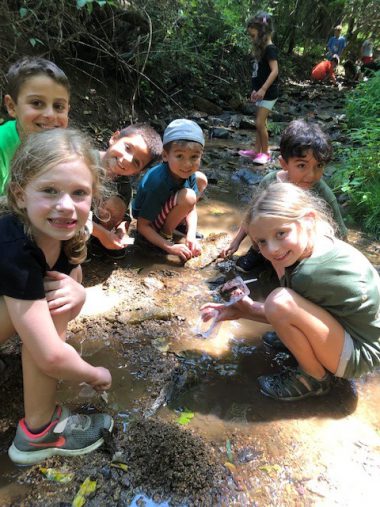
Practice using your senses as you explore a stream and its surroundings. Students will discover what lives in and near a stream and how the plants and animals that live near a stream are different from those that live in a field.
Stream Study
Standards: 3.3.4/4.1.4/4.3.4/4.6.4/4.7.4
Grades 4-5; 2 hours; $6.25/participant
Explore a stream community while discovering how its inhabitants interact and adapt. Students will collect and identify organisms and examine their interdependency through the transfer of energy.
Weather Whys
Standards: 3.5.4/4.1.4/4.6.4
Grades 4-5; 2 hours; $6.25/participant
Explore the Myrick Center, or other natural area while learning about weather. Learn how to identify clouds and take basic meteorological measurements, such as temperature, wind speed, and relative humidity. Discover microclimates as you go on a heat hunt. Figure out how weather impacts plants, animals and rocks.
What's Bugging You?
Integrated Pest Management (IPM)
Standards: 4.3.4/4.4.4/4.5.4/4.6.4
Grades 3-5; 2 hours; $6.25/participant Available May 5-Oct.10
Explore the Myrick Center's organic garden to see different ways of monitoring pest populations and various IPM tactics to deal with these pests. Students will work in teams to collect and identify garden insects to determine which ones are harmful to plants and which ones are beneficial in the garden. Students will play a game to learn how pesticides and other chemicals bioaccumulate in the food chain.
Wonderful Wetlands
Standards: 4.1.4
Grades 3-5; 2 hours; $6.00/participant
Take a wetland walk along a stream corridor and participate in hands on activities to see how wetlands soak up water, act as filters and help to slow runoff. Search for animals and their signs and discover the unusual adaptations of wetland plants. Discover the biological diversity of the wetland environment and why the protection of wetlands is important.
 School Programs at the Myrick Conservation Center |
MIDDLE SCHOOL PROGRAMS
Amazing Adaptations
Standards: 4.6.7/4.7.7
Grades 5-6; 2 hours; $6.25/participant
Observe a variety of structural and behavioral adaptations of plants and animals at the Myrick Center or other natural area. Students will learn about the color of worms, play games to learn about adaptations and go on a hike to see examples of how plants and animals adapt to survive.
Backyard Farming
Standards: 4.4.7/4.5.7/4.6.7/4.8.7
Grades 6-8; 2 hours; $6.25/participant
Available Sept 3-Oct 19, April 14-Oct.17
Learn about the life cycle of plants and insects while exploring the Myrick Center's organic vegetable garden and greenhouse. Students will explore the soil, search for insects and help plant and harvest vegetables as the season permits. Produce is donated to local food cupboards. Call for details about a double (two visit) program option.
Bugs in the System
Integrated Pest Management (IPM)
Standards: 4.5.7
Grades 6-8; 2 hours; $6.25/participant Available May 5 - Oct. 10
Explore the Myrick Center's organic garden to see different ways of monitoring pest populations and various IPM tactics to deal with these pests. Students will work in teams to collect and identify garden insects and determine which insects are harmful to plants and which insects help the garden. Students will play a game to learn how pesticides and other chemicals bioaccumulate in the food chain. Maximum: 40 students.
Canoeing Water Quality Program
Standards: 4.1.7/4.3.7/4.6.7/4.7.7/4.8.7
Grades 7-8; 4 hours; $30.00/participant (transportation included)
Outreach fee does not apply Available Sept 3-Oct. 5, May 5-Oct 3
Available Sept 3-Oct 19, April 14-Oct.17
Search for aquatic organisms in a stream and learn how to use them as indicators of stream health and change. Students stop at water quality testing sites along the Brandywine Creek. Canoeing experience is not necessary. Basic instruction will be provided. An east branch or west branch trip is available; please indicate which trip at the time of registration. Organizing adult canoes for free. Additional adults cost $15 each.
Communities at Work
Standards: 4.1.7/4.3.7/4.6.4/4.7.4
Grades 5-8; 2 hours; $6.25/participant
Explore a pond, stream or field/forest community while discovering how its inhabitants interact and adapt. During each community study, students collect organisms and examine their interdependency through the transfer of energy. Small groups may request which community they would like to explore. Due to property limitations, large groups will need to be divided so that each student explores only one community.
Evil? Weevils?
Integrated Pest Management (IPM) in your backyard
Standards: 4.3.7/4.5.7/4.6.7
Grades 5-8; 2 hours; $6.00/participant
Discuss when plants and animals are pests while considering the different ways they can be controlled. Explore the Myrick Conservation Center property in search of IPM techniques used to control pests. Play a game that demonstrates how quickly noninvasive plants spread. You will even visit the organic vegetable garden to see some nonchemical methods used to control garden pests and learn about an innovative biological control which is being monitored at the Center.
Indoor Out School
Standards: 4.1.7/4.3.7/4.6.7/4.7.7/4.8.7
Grades 6-8; 3-5 days/ call for pricing information
Indoor Out School is an interdisciplinary, outdoor experience. Each student will complete community studies of a pond and stream and learn how land-use impacts our watershed. All students will also participate in team-building activities. Afternoon electives include nature photography, nature's math, science and art, and survival skills. The program culminates with a mock Land-use Hearing. There's something for everyone! There is a minimum commitment of three days for this program.
Stream Study
Standards: 3.3.7/4.1.7/4.3.7/4.6.7/4.7.7
Grades 6-8; 2 hours; $6.25/participant
Explore a stream while collecting, identifying and categorizing vertebrates and invertebrates found in this community. Evaluate the physical and chemical parameters of the stream and learn how scientists determine water quality.
Team Challenge
Grades 6-8; 2 hours; $6.25/participant
How do you get back to your base camp if you must first cross an alligator- infested swamp? Can you get a bucket of nitroglycerin away from the approaching prairie fire if the only way out is across a canyon? Students will participate in a variety of problem-solving experiences requiring group cooperation and physical activity. Activities are designed to break down barriers, foster teamwork and identify leadership potential among students. This program is recommended at the beginning of the school year or prior to group projects or problem-solving activities.
Wetland Field Study
Standards: 4.1.7/4.3.7/4.6.7/4.7.7/4.8.7/4.9.7
Grades 6-8; 2 hours; $7.50/participant
Working as a scientific team, students will complete a field study in a wetland. The class will be broken down into small groups beforehand. Each group will explore aspects of the wetland (plants, animals, hydrology, soil, and atmosphere/mapping) with an Environmental Instructor. Data sheets will be filled out on-site to be reported on in class after the study.. Before students visit the wetland, teachers can meet with a BVA/RCVA Instructor to go over pre-and post-activities for the study.
Working Watershed
Standards: 3.5.4/4.1.7/4.3.7
Grades 6-8; 2 hours; $6.25/participant
Learn about the water cycle, why water is so precious and why it must be protected. Students will see how a watershed is defined by topography and how watersheds are affected by human development. Students will pollute a water sample and build a filter to attempt to clean it up.
HIGH SCHOOL PROGRAMS
Pond Study
Standards: 3.5.10/4.1.10/4.1.12/4.3.10/4.7.10/4.7.12
Grades 9-12; 3 hours; $10.25/participant
Analyzing the physical, biological and chemical parameters of a pond, students will determine the health of the system. They will then hypothesize how to fix the problem(s). This program can be done at the Myrick Center or at a pond closer to your school.
Stream Study
Standards: 3.5.10/4.1.10/4.1.12/4.3.10/4.7.10/4.7.12
Grades 9-12; 3 hours; $10.25/participant
Students will analyze the physical, biological and chemical parameters of a stream to determine its health. Students will then strategize how to turn a red stream blue. This program can be done at BVA's Saalbach Farm or at a stream closer to your school.
|
|